Hinakazari/Hinaningyo- 雛飾り/雛人形

Hinakazari/Hinaningyo- 雛飾り/雛人形 

Hinamatsuri also known as Girl’s Day, is a special day for girls. The day is celebrated on 3rd March every year. Today we are going to taliking about Hinamatsuri and specially forcus on 雛飾り/雛人形 (Hinakazari/Hinaningyo) Families which has daughters decorate the platform (Hinadan 雛壇) which is covered by red carpet (Dankake 段掛). Then display the dolls (雛人形 Hina-ningyo) and small furnitures on it (雛飾り Hinakazari).

Hinaningyo wears 平安装束 (Heian Syozoku – traditional wear for noble in Heian period). The custom of displaying the dolls begun in Heian period. People believed the dolls protect people from bad luck or bad fortune. Initially, the dolls is for playing kids of noble in Heian period. Also there was a custom which is 流し雛 (Nagashibina – doll floatong on the river). These custom became the basis, people started to worship dolls.

On the first platform there are two dolls. The male doll is called 男雛 (O-bina), female one is called 女雛 (Me-bina). They are the emperor and the empress.

Their are three ladies on the second platform which is called 三人官女 (San-nin Kanjo). Each of them holds Sake equipments.

The third platform holds five male dolls which is called 五人囃子 (Gonin Bayashi). Each has different things. From left to right on the picture, the first one has the 太鼓 (Taiko – drum), second one has the 大鼓 (Odutsuni – big drum), third one has the 小鼓 (Kodutsumi – small hand drum), forth one has the 横笛 (Yokobue – flute), and fifth one has 扇子 (sensu – a folding fan) and he is a 謡い方 (Utaikata – singer).

The two ministers are displayed on the forth platform. The right one is called 右大臣 (Udaijin), the left one is called 左大臣 (Sadaijin). And the between the two, there are diamond-shaped stands 菱台 (Hishidai) bearing diamond-shaped ricecakes 菱餅 (Hishimochi).

Finally, on the fifth platform there are two plants, a mandarin orange tree 右近の橘 (Ukon no Tachibana) and on the leftmost, a cherry blossom tree 左近の桜 (Sakon no Sakura). Between two of them there are three Samurai as the protectors of the emperor and the empress. The left one on the picture is 泣き上戸 (Nakijogo – Maudlin drinker), the middle one is 怒り上戸 (Okorijogo – Cantankerous drinker), the right one is 笑い上戸 (Waraijogo – Merry drinker).

There are many types of platforms which is like three tiers, five, six, seven or you can find even hundred tiers platform (obviously hundred one is mostly for commercial or event) and sometimes use the stairs of shrine as platform. The picture on the right is one of the most famous Hinamatsuri festival event in 大子町 (Daigomachi, Ibaraki).

Answers

Here’s the answers for Quiz Japan (previous post)

1.Where is the capital city of Japan?

Tokyo

2.What is the name of the biggest prefecture in Japan?

Hokkaido

3.How many prefectures does Japan have?

47

4.Where is the area for Otaku(geek) people in Tokyo?

Akihabara

5.What is the name of the era before 平成(Heisei)?

昭和(Syowa)

6.Who is the arch rival of 悟空(Goku) in Dragon Ball?

ベジータ(Vegeta)

7.How do Japanese people call Smartphone?

Sumaho

8.Why does Japan drive on the left side?

The traffic rule is based on British rule

9.Which flower does 桜 mean?

Cherry Blossom

10.What does マジで(Maji de) mean?

Are you serious? or to emphasise something → マジで寒い: it’s really cold.

11.When Japanese people say 生(Nama) in 居酒屋(Izakaya), they will get?

Beer

12.How many stops does Yamanote Line have?

29

13.Where can you find ハチ公(Hachi-ko)?

Shibuya station

14.When do Japanese people eat roasted soybeans?

3rd February

15.How do japanese people call business person/office worker in Japanglish?

Salaryman

Quiz Japan

-Quiz Japan-

Today we have a quiz for you about Japan.

How many questions can you answer correctly?

 1.Where is the capital city of Japan?

2.What is the name of the biggest prefecture in Japan?

3.How many prefectures does Japan have?

4.Where is the area for Otaku(geek) people in Tokyo?

5.What is the name of the era before 平成(Heisei)?

6.Who is the arch rival of 悟空(Goku) in Dragon Ball?

7.How do Japanese people call Smartphone?

8.Why does Japan drive on the left side?

9.Which flower does 桜 mean?

10.What does マジで(Maji de) mean?

11.When Japanese people say 生(Nama) in 居酒屋(Izakaya), they will get?

12.How many stops does Yamanote Line have?

13.Where can you find ハチ公(Hachi-ko)?

14.When do Japanese people eat roasted soybeans?

15.How do japanese people call business person/office worker in Japanglish?

Setsubun – 節分

Today we are going to talk about Setsubun (節分)  Setsubun is basically the day of the beginning of the seasons and its name literally means “seasonal devision” Particularly, the one on 3rd February is celebrating for coming of spring and it is really big in Japan. This is also the one of the most famous seasonal activities in Japan so you can find lots of things everywhere stores for Setsubun around this season. We have two special acts for the day and one is Mamemaki (豆まき), the other one is Ehomaki (恵方巻き)

– Mamemaki

The custom of Mamemaki started in the Muromachi period. We throw Fukumame (福豆:Fortune roasted soybeans) to Oni (鬼:demon) who is performed by Toshiotoko (年男: the male who was born on the corresponding animal year on the Chinese zodiac) in your house or someone else a man in your house while we say “Oni ha soto! Fuku wa uchi!” (Demons out, Luck inside) This is for purifying you and your house from bad luck or bad health. Then people eat the soybeans as same as your age. Some families put up small decorations of Hiragi Iwashi (柊鰯:head of sardine and holy leaves) on their house entrances so that bad luck will not enter to their house. Nowadays people tend to go to shrine and do this custom. Also some Japanese celebrities come to the shrines as guests every year and throw the beans so people go there to see them. Especially, at Senso-Ji, Asakusa loads of people go and enjoy the annual activities.

– Ehomaki

Ehomaki is an another big custom on Setsubun. As you can see, Ehomaki is the name of Futomaki sushi (太巻き) We eat this in silence on Setsubun while facing the year’s lucky compass direction, determined by the zodiac symbol of that year. It basically comes from Kansai area but today in Japan, it is quite popular. Why the Sushi has become popular in Japan is the biggest convenience store in Japan, Seven-Eleven. When they tried to sell the Futomaki to all of Japan, they came with the name “Ehomaki” in 1998 since the it’s been spread to all of Japan and took hold as the act for Setsubun.

If you are in Japan, why don’t you try to do them?

Kamakura – かまくら

– Do you know Kamakura? 

Kamakura is dome-shaped snow house which is really popular in several cities in Tohoku district. The dome-shaped house is made for praying for the god of water so there is the alter decorated with paper stripes. And Specially, in Uonuma, Niigata (Chuetsu Region), people call it Hon-yara Do (ほんやら洞)

Inside the snow house, people wear Hanten (半纏 : a short winter coat, is an item of traditional Japanese clothing. The coat started to be worn, especially by the common people, in the 18th century during the Edo period) And there is Shichirin (七輪 : a small charcoal grill) in the centre of the house to grill Mochi (餅 : Rice cake) or boil Nabe (鍋 : Hot pot) or sometimes Kotatsu (こたつ : a low, wooden table frame covered by a futon, or heavy blanket, upon which a table top sits. Underneath is a heat source, often built into the table itself)

Kamakura has really long history. Especially, Rokugo no Kamakura (in Misato-cho, Akita) has been continuing for about 700years. Thus Kamakura is an important annual function for Japanese people.  Unfortunately, it doesn’t snow enough to make Kamakura in Tokyo, so if you want to see them, you should definitely go to Tohoku!

Nenmatsu-Nenshi (New Year’s eve and New Year’s day) – 年末年始

もういくつ寝ると、お正月。

The New Year’s day will come soon so today’s topic is Nenmatsu-Nenshi!

New Year’s Day

New year is the biggest celebration in Japan.  We eat traditional food which is called Osechi on the new year’s day and people sent and receive Nenga-jo (年賀状) for the day. And only kids can get Otoshi-dama.(お年玉: money given as a gift at the New year)

New Year’s Eve

On the New Year’s eve, also we have very important tradition which we must do. It is O-soji. Soji basically means ‘cleaning up something’ or ‘tidying up something’ and O- is a word for describing large-scale or emphasising how they are big or how their scale is large. Yes we have to clean up whole the house from bottom to the top. O-soji has been being doing by Japanese people from Heian period (more than 1000years ago) for purifying of bad fortune, for this reason people still do it on the New Year’s eve to have a good new year and being clear themselves. After that finally people can be relaxed. Normally, lots of people spend time watching TV. During the New Year’s eve and the New Year’s day you can watch loads of special TV program for the celebration. In the meantime, the time to eat Toshikoshi-soba will come. This is also very Japanese traditional thing for the New Year’s eve. Toshikoshi means seeing the old year out and Soba means Japanese noodle so we have Soba in the night on the New Year’s eve till the New Year’s day will come. Then we go to temple or shrine for Hatsu-mode. (初詣: to pray to god for having a good year) These are traditional Japanese New Year’s day activities. 

Happy christmas and Happy New Year!!

Illumination – イルミネーション

Illumination – イルミネーション

Illumination activity has become quite popular in Japan. Cities get lighted by millions of colourful lights for couple of months. It is absolutely beautiful. You should go and see it!

History of illumination activity in Japan

The very first illuminations in Japan

In 1903, Osaka, the national industrial exhibition was held and the very first illumination in Japan was displayed there. The picture on the left depicts the very first illumination in Japan at that time. The ladies in front of the picture still wear Kimono (Japanese traditional wear) but they decorated lights on the buildings already and it looks very beautiful.

Ginza Meizi-ya Christmas ads

One year later, illuminations were decorated in Christmas tree by Hakaru Isono (磯野計) in Ginza,Tokyo. He’d been to the UK to study commercial science and he was influenced by their Christmas culture. So he brought back some stuff and started to imitate the culture from the UK in Tokyo and then one of them was the illumination in tree. This is the very first decorated Christmas tree in Japan therefore illumination in Christmas tree became well-known seasonal tradition in Japan.

Big illumination activities in Japan

SENDAI Pageant of Lights

In 1986, Sendai, Miyagi (宮城県仙台市) people started to display millions of lights in trees on the road.This is called SENDAI Pageant of Lights and this is the first illumination activity in Japan.Then this event has become quite famous not only in Japan, but also in some other countries so some organisations from them come to Sendai to inspect the activity and get advised. Several years later cities across Japan started to decorate lights in trees, on buildings or even landmarks.Thus illumination activities have spread all around Japan.

Kobe Luminarie

Especially, Kobe Luminarie (is name of the event in Kobe) is influenced by the event. It started in 1995, after the earthquake hit Kobe, they organised the activity for reviving the city. And now Kobe Luminarie has become the one of the biggest illumination activities in Japan. These two big illumination activities are held in December therefore illumination activities are taken hold by Japanese people as the one of the most popular seasonal tradition in winter.

Illumination activities in Japan today

As I mentioned, illumination activities has become quite popular in Japan. Especially, today, they are quite popular with young people for dating. So illumination activities in Japan are also recognised as the event for a couple or dating. Basically, in this season you can find lots of stuff for a couple. For instance, loads of magazines make features of Christmas dating and they definitely write about illumination activities for dating. In fact, incredibly number of people go to see it every year. But on the other hand, some people hate it and get hurt by the beautiful lights. For example, my friend is made upset by the colourful wonderland. He said “I have to get a girlfriend before it turns off.”

Anyway they are absolutely beautiful so you can enjoy with your family, friends or even yourselves. I strongly recommend to see it at least once!

Weird Izakaya in Tokyo

Today I’m going to talking about weird Izakayas in Tokyo.

Basically Izakaya is just a place for drinking and having some foods but nowadays they start to distinguish between other Izakayas to be unique. So I will show you some of them.

1. Ninja Akasaka

As you can see, Ninja (I don’t know they are qualified or not.) works there.

Address: Chiyoda-ku, Nagata-cho 2-14-3, Tokyo  Tokyu Plaza Akasaka 1F

2. Vows (Bozu) Bar 

Vows (Bozu) means kind of hair cut which is clean-shaven or lads and sometimes monk;Buddhist priest in Japanese. So in here monks work as bar man.

Address: Shinjuku-ku, Araki-cho 6-42  AG buiding 2F

3. Izakaya Kagaya

Welcome to weird country Japan. In my opinion, here is the weirdest Izakaya in Japan. I can’t explain how they are weird but anyway they are.. If you’d love to discover new experience, you should see what is going on there. But please do not hate Japan.

Address: Minato-ku, Shinbashi 2-15-12  Hanasada building B1

Oyster goes around comes around – 牡蠣が結ぶ日本とフランス

I went to Miyagi prefecture (Tohoku district, North of Japan) few days ago for travelling around the district. Miyagi is famous for good seafood so lots of tourists go there to have it. Especially, oyster is one of the best specialties of Miyagi.


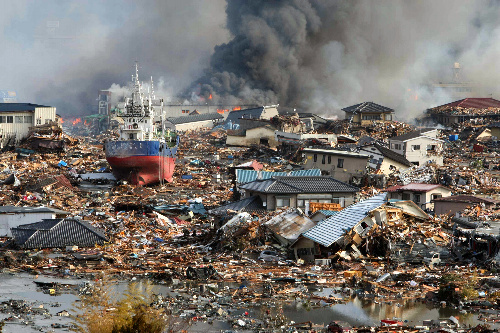
But as you may know, 3 years ago, Tohoku was hit by huge earthquake also the massive Tsunami completely destroyed the several cities and towns.  Miyagi was one of them and it was unspeakably awful. I couldn’t believe my eyes when I saw how the city was collapsed on TV.

Needless to say, their specialties were damaged too, so the people worked for it were absolutely devastated. Of course, oyster industry was got terrible damage so everyone felt hopeless. But it wasn’t end of the story. The Savior came from France and they helped for revival of oyster industry in Miyagi. Then they finely got back their specialty.

Apparently, in 1970 and 1990, Brittany oyster industry was destroyed by a virus. At that time the industry in Miyagi had sent larvae of oyster to France and they regained their oyster. So this time Brittany returns a favour for what Miyagi did in the past. So we can still enjoy good oysters because of the lovely story between France and Japan.

What a great story, we appreciate you France! Merci beaucoup!

Cheap Tokyo Part 3 Visiting and lesson – 安く楽しむ東京 その3 見物と体験

So this time I am going to talk about good place to visit today!

1. Meguro Tanku Garden – 目黒天空庭園 Meguro Ikejiri-Ohashi Station

This big roofed garden is located on Ohasi Junction (大橋ジャンクション) which is a system interchange between Tokyo Metropolitan Expressway Route 3 and Central Circular Route C2. The garden covers approximately 7,000 square meters and it has 1,000 trees and shrubs. As I mentioned there is a motorway below but the garden is pretty quiet so you can get relaxed and enjoy the view from the garden.

2. Traditional Japanese boat tour – 和船乗船体験 Yoko Zikken-Gawa Shinsui Park (横十間川親水公園) Toyo-cho Station

You can get on a boat which is Edo era styled Japanese boat.  Yoko Zikken-Gawa Shinsui Park (横十間川親水公園) has a waterway and the boat goes on it for about 20 min. Also you can row the boat, if you want to. You can get on the boat for free, but you should check the schedule for the tour so if you are into it, visit http://www.city.koto.lg.jp/seikatsu/douro/7476/7477.html and check it out.

3. Korin-in Zazen lesson – 香林院座禅体験 Hiro-o Station

You can learn how to Zazen at Korin-in. Zazen is a sort of religious practice for mental concentration. Basically, this training is for renouncing worldly desires. You sit on a cushion and clear out desires from your mind. Nowadays the practice is getting popular for young people so you can find some temples which you can Zazen at. And lots of temples hold lessons for free. if you want to try it, google Zazen lesson or something and find good one!