Today we take a closer look at two concepts that is very Japanese. Let’s learn about Japanese “service”, and how the Japanese are split between what they want, and what is expected.
“Omotenashi”
The word ‘Omotenashi’ in Japanese comes from omote (面 “surface”) and nashi (無し “less”), which means “single-hearted”, and also mote (持て “carry”) and nashi (為し “accomplish”), which means “to achieve”. Therefore, Omotenashi has two meanings, which include offering a service without expectation of any returned favour, and the ability to actualise that idea into an action.
Interestingly, the Japanese language makes no distinction between ‘guest’ and ‘customer.’ In English, the concept of ‘service’ suggests a hierarchy between the ‘server’ and the ‘customer.’ The Japanese Omotenashi, however, is based on a non-dominant relationship between equals – between the person offering the service (the host) and the person receiving it (the guest or customer).
“Honne” vs “Tatemae”
Honne and tatemae are Japanese words that describe the contrast between a person’s true feelings and desires (本音 “honne”) and the behavior and opinions one displays in public (建前 “tatemae”, “façade”).
Honne may be contrary to what is expected by society or what is required according to one’s position and circumstances, and they are often kept hidden. Tatemae is what is expected by society and required according to one’s position and circumstances, and these may or may not match one’s Honne.
The notion of Honne and Tatemae is seen by some as a cultural necessity resulting from a large number of people living in a comparatively small island nation. Close-knit co-operation and the avoidance of conflict are considered to be of vital importance in everyday life.
Even though there might not be direct single word translations for honne and tatemae in some languages they do have two word descriptions. For example in English “private mind” and “public mind.” Some researchers suggest that the need for explicit words for Tatemae and Honne in Japanese culture is evidence that the concept is relatively new to Japan, where as the unspoken understanding in many other cultures indicates a deeper internalization of the concepts.
The conflict between Honne and Giri (“social obligations”) is one of the main topics of Japanese drama throughout the ages. For example, the main character would have to choose between carrying out his obligations to his family or his feudal lord, or pursuing a stealthy love affair.










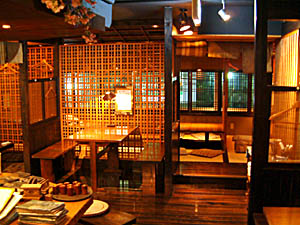
 the place you are either seated on tatami mats next to low tables, or on chairs with a normal table. You are then often given a wet towel, called “oshibori” (お絞り), and then you are given a light snack that is included in the final bill. You then order drinks and food during your stay as desired.
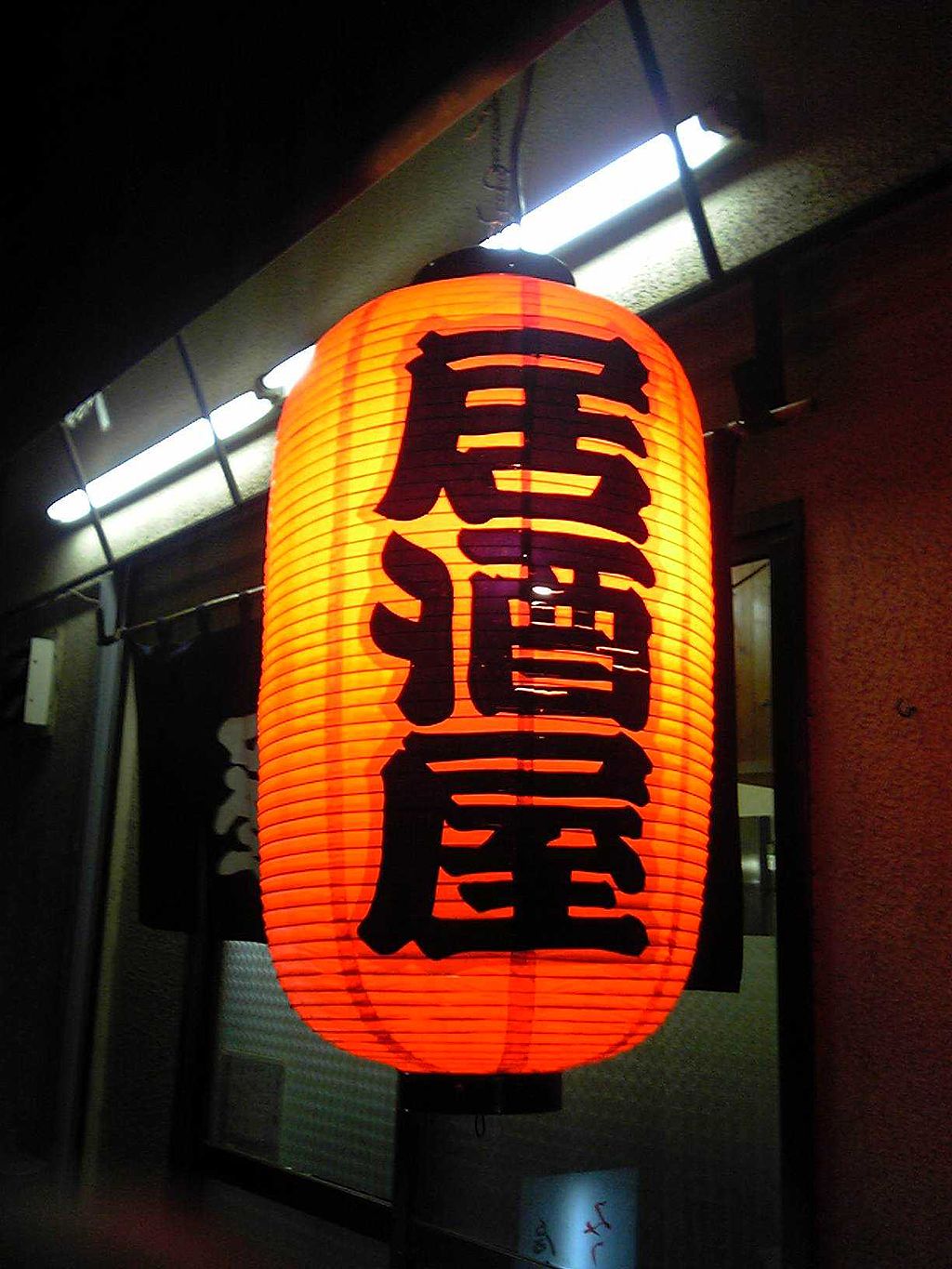
 Izakaya also come in different varieties, with big chains, cosplay places, yakitori-ya, and akachôchin (“red lantern”) referring to smaller places that doesn’t belong to a chain.
 If you have ever been to a store in Japan, you are sure to at least have seen the おにぎり(“Onigiri”). Even if you never bought them, or tried them, you have some form of idea what it is: usually a triangle-shaped rice ball, with sometimes weird fillings in it. And if you don’t master the Japanese language fully, the kanji-heavy names can sometimes lead to Onigiri-roulette: you go “Oh, what the heck, how bad could it be?”, you buy one, take a bite, and then realise it’s 梅干し (“Umeboshi”, dried and pickled plum) in it, and not that awesome ツナマヨ (“Tsuna-mayo”, Tuna and Mayonnaise) that you had last time. O_O
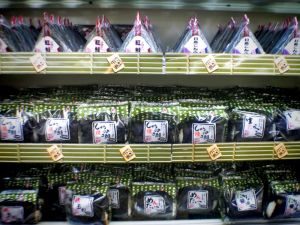 The earliest mention of おにぎり is from the 11-century diaries of Lady Murasaki. But the idea of the rice ball predates that by a long way. Before the use of chopsticks became popular in the Nara period, rice used to be rolled into small balls so that they could be picked up more easily for eating. From the Kamakura period to Edo period (ca. 1100’s – 1600’s) おにぎり was used as a quick meal. This made sense as cooks simply had to think about making enough onigiri and did not have to concern themselves with serving. These おにぎり were simply balls of rice flavored with salt. のり did not become widely available until the mid-Edo period, when the farming of のり and fashioning it into sheets became widespread. It is also known that samurai used to store rise balls wrapped in bamboo, as a quick meal during wars.


#mediaviewer/File:A_man_confronted_with_an_apparition_of_the_Fox_goddess.jpg)
#mediaviewer/File:FushimiInariTorii.jpg)
 COSMOS TOKYO